7 Interior Design Tips for a Successful Project
The essentials in 30 seconds
Getting your interior design right comes down to 7 simple principles: master the 3-colour rule (60/30/10), respect proportions and space, choose the right floor and wall finishes, get the lighting right, balance function and comfort, define a coherent style, and test before you commit. These rules work for every room and every budget. Start by measuring your space and pinning down your colour palette: the rest will follow naturally.
Estimated reading time: 8–10 minutes
Introduction
A beautifully decorated home isn't about budget or artistic talent. It's about method and a few simple principles.
Whether you have a bedroom to reinvent, a living room that feels too empty or a kitchen lacking in charm, the same rules apply. These 7 interior design tips will help you turn any space into somewhere that's a joy to live in.
The good news: you don't need major building work or a huge budget. Often, it's simply a matter of knowing where to look and how to organise what you already have.
Tip 1: Master the 3-colour rule
Why this rule works
The 3-colour rule is the foundation of any harmonious scheme. It avoids the "too busy" or "too bland" effect by creating a natural visual balance.
How to apply it
Split your palette into three colours following the 60/30/10 rule:
- 60%: dominant colour (walls, floor, large furniture)
- 30%: secondary colour (sofa, curtains, rugs)
- 10%: accent colour (accessories, wall decor)
A real-life example
A modern living room might combine a white wall (60%), grey furniture (30%) and teal accessories (10%). This harmony creates a calming, timeless feel. Looking for living room ideas? Discover our living room wall stickers to add a personal touch with no commitment.
Practical tip
Before you paint or buy furniture, test your palette with samples. Look at it at different times of day (natural light in the morning, artificial light in the evening). Colours change depending on the lighting.
Tip 2: Respect proportions and space
Why it matters
A badly proportioned space feels uncomfortable, even if the colours and furniture are beautiful. Respecting proportions means creating an easy flow and a balanced feel.
How to measure your room
Before buying anything, take measurements:
- Length and width of the room
- Ceiling height
- Door and window sizes
- Position of plug sockets and radiators
Draw a simple plan (even on paper) with your existing furniture. It will help you picture the space available.
Balancing furniture and empty space
A common mistake: filling the room with furniture "because you've got it". The result: the space feels small and stifling.
Golden rule: leave at least 30% of the room empty. This empty space gives the eye room to breathe and makes the room feel bigger.
A real-life example
For a 20 m² (215 sq ft) living room:
- Sofa: 2.5 m wide
- Coffee table: 1 m x 0.6 m
- Shelving: 1.5 m wide
- Empty space: room to move around the furniture, clear walls
Practical tip
Before moving furniture, use masking tape to mark out where it will go on the floor. You'll see straight away whether it's balanced.
Tip 3: Choose the right floor and wall finishes
Floors and walls: the starting point
Your floor and wall finishes are the foundation of your decor. They take up 60% of what you see. Choose them well and you've done 80% of the work.
Walls: paint or keep them white?
White or light walls:
- Make the space look bigger
- Suit every style
- Perfect if you change your decor often
Painted walls:
- Create atmosphere
- Define a style
- Need more thought (the colour has to last)
Floors: material and colour
Your flooring should be:
- Practical: easy to clean for the room (kitchen, bathroom)
- Durable: able to withstand daily foot traffic
- Harmonious: complementing your colour palette
Practical tip
Before you renovate, test colours on a large scale. Buy paint samples and stick them on your walls. Look at them for 3 days at different times.
Tip 4: Get the lighting right
Why lighting changes everything
Lighting is often forgotten, yet it's what creates the atmosphere. A well-lit room looks bigger, more welcoming and warmer.
The three types of lighting
1. General lighting (ceiling light)
- Lights the whole room
- Essential, but cold on its own
- Use it alongside other sources
2. Task lighting (work lamps)
- Lights a specific area
- Essential in the kitchen and home office
- Example: a pendant above the table
3. Mood lighting (floor lamps, wall lights, candles)
- Creates a warm atmosphere
- Perfect for the evening
- Example: a floor lamp in a reading corner
How to combine lighting
In every room, use at least 2 light sources:
- Ceiling light + floor lamp
- Wall lights + table lamp
- Spotlights + standing lamp
Practical tip
Fit dimmer switches. You can adjust the brightness to the time of day and create different moods in the same room.
Tip 5: Balance function and comfort
Decor that works for everyday life
A beautiful room that isn't practical is a room you won't enjoy living in. The balance between looks and practicality is crucial.
Ask the right questions
Before you decorate, ask yourself:
- Who uses this room? (children, adults, pets)
- How is it used? (work, relaxation, meals)
- What storage is needed? (clothes, books, toys)
- How do people move through it every day? (an easy flow)
Minimalism vs clutter: finding the balance
Too minimalist: a cold, impersonal, unwelcoming room
Too cluttered: a stifling room that's hard to clean and stressful
The balance: every item has a reason to be there. No decorating "just for the sake of it".
A real-life example: kids' room and adult bedroom
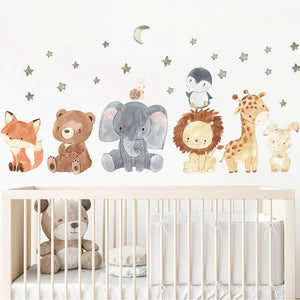
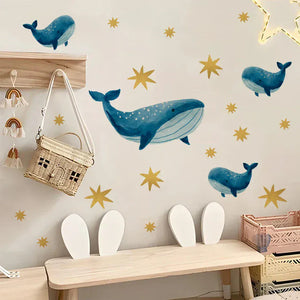
Kids' room: choose furniture that grows with your child (bed, desk) and leave space to play. Soft colours (sky blue, mint green) encourage calm and concentration. Our kids' wall stickers are perfect for personalising the room without overloading the space.
Adult bedroom: go for pared-back decor with the headboard as the focal point. Neutral tones (beige, grey, white) create an atmosphere that's ideal for rest. Our bedroom wall stickers offer a flexible way to add character without any building work.
Practical tip
Before buying a piece of furniture or an accessory, ask yourself: "Where am I going to put it?" If you don't have an answer, don't buy it.
Tip 6: Define a coherent style
Why coherence matters
A coherent style creates visual harmony. You don't have to follow a trend, but your choices should "speak the same language".
The main decor styles
| Style | Characteristics | Colours |
|---|---|---|
| Modern | Pared-back, functional, clean lines | White, grey, black, bright colours |
| Scandinavian | Minimalist, light, natural | White, grey, pale wood |
| Industrial | Raw, metals, concrete, vintage | Grey, black, brown, metal |
| Boho | Colourful, textured, eclectic | Terracotta, ochre, pink, blue |
| Classic | Timeless, elegant, symmetrical | Beige, cream, gold, brown |
How to define your style
- Get inspired: browse photos on social media, mood-board apps and in magazines
- Spot what they have in common: which colours keep coming up? Which materials?
- Test: buy a few pieces and see whether you really like them
- Adapt: your personal style is a unique mix, not a copy
Practical tip
Create a mood board with images and colour and material samples. Look at it for a week. If you still love it, that's a good sign.
Tip 7: Test before you commit
Why testing is crucial
Decorating decisions are often hard to undo (paint, floor and wall finishes). Testing first saves you regrets and unnecessary spending.
How to test effectively
Test colours:
- Get paint samples (often free in store)
- Stick them on your walls
- Look at them at different times (morning, midday, evening)
- In natural AND artificial light
Test furniture:
- Measure the exact space
- Mark it out with masking tape on the floor
- Borrow or hire before you buy
- Try the sofa in the shop (really sit on it)
Test accessories:
- Start small (cushions, pictures, wall stickers)
- Change things gradually
- Keep what you love and remove the rest
A real-life example: reinventing a living room
Week 1
Test a new wall colour (sample)
Week 2
Test where the furniture goes (masking tape)
Week 3
Add accessories (cushions, wall stickers)
Week 4
Decide whether you really love it before investing
Practical tip
Wall stickers are perfect for testing a look with no commitment. You can change them, remove them and reposition them. Zero risk, 100% flexibility.
Conclusion
Getting your interior design right comes down to these 7 simple tips:
- Master the 3-colour rule (60/30/10)
- Respect proportions and space
- Choose the right floor and wall finishes
- Get the lighting right
- Balance function and comfort
- Define a coherent style
- Test before you commit
Start now: measure your room, pin down your colour palette and test things gradually. You don't need to change everything at once.
And if you're looking for a quick, flexible, no-commitment way to add colour and style to your walls, that's exactly what wall stickers are for.