Bedroom Decor Ideas: Styles, Colours and Inspiration
To get your bedroom decor right, three things really matter: choosing a coherent style (cosy, minimalist, Japandi, romantic, industrial, boho), going for a colour palette that's good for sleep, and taking care over the finishing layer – soft lighting, layered textiles and a few well-chosen objects. The rest follows naturally.

Coming up with bedroom decor ideas is first and foremost about creating a place to rest. Not a showroom, not a frozen copy of a mood-board photo – a space where you actually want to fall asleep and wake up. The good news is that there are simple principles that work in almost any set-up, whether you're starting with a large, bright bedroom or nine square metres in a city flat.
This article runs through the styles, colours and objects that make a real difference – without turning into a shopping list or an unattainable magazine shoot. The idea: to give you what you need to put together a bedroom that feels like you, with what you already have and a few well-placed touches.
Decor styles for a bedroom
Before choosing a colour or a piece of furniture, you need to know which look you're drawn to. Six main styles lead the way in bedroom decor inspiration today. None is better than another – each tells a story and calls for different materials, shades and lighting.
The cosy bedroom: warmth and softness
The cosy, cocooning style is all about layering soft textures – washed linen, bouclé wool, corduroy, a chunky-knit throw. The palette is warm: cream, dusky pink beige, taupe, terracotta. Lighting is soft, with several low-level sources. It's the look that turns the bedroom into a cocoon where all you want to do is wrap yourself up in the duvet.
The minimalist bedroom: pared-back and calming
Minimalism in the bedroom is the art of keeping only the essentials. A well-made bed, one or two bedside tables, a light – and that's it. The walls stay pale, the bedding in neutral tones, and you avoid clutter. The aim: a visually restful space that helps you unwind at the end of the day.
The Japandi bedroom: nature and serenity
Japandi blends Japanese minimalism with Scandinavian warmth. It's all about natural materials – pale wood, raw linen, matt ceramics, woven straw – and a very tight palette of ecru tones, sage green and deep black used in small touches. Botanical motifs are right at home in this look, and it's that gentle botanical feel you'll find in our selection of nature wall stickers, perfect for dressing a wall without disturbing the calm.
The romantic chic bedroom
Softer and more enveloping, romantic chic plays on powdery tones – nude pink, old rose, faded mauve – paired with luxurious materials such as washed silk or velvet. A buttoned headboard, an antique mirror, candles on the chest of drawers: the aim is an atmosphere that recalls the bedrooms of a tastefully renovated family home.
The industrial and vintage bedroom
An exposed brick wall or one painted charcoal grey, a black metal bed, a worn vintage rug, a filament pendant – industrial style gives the bedroom character without making it cold, as long as you warm it all up with raw wood and thick textiles. Second-hand vintage finds (a 1960s bedside table, an anglepoise-style lamp) complete the look and give the space a real identity.
The boho bedroom
Today's boho has moved on a lot – out with hippie clutter, in with a more relaxed version: Berber rugs, rattan pendants, cane headboards, houseplants. The palette is earthy (terracotta, ochre, khaki green) and ethnic-inspired patterns appear in small touches rather than across whole walls.

Which colours should you choose for a bedroom?
In a bedroom, colour isn't just about looks – it directly affects sleep quality and how you perceive the space. Saturated or cool shades stimulate the brain, while neutral, natural shades calm it. That's why it's best to avoid pure bright colours in the bedroom and choose muted, earthy or powdery versions instead.
Neutral and beige tones: the cosy look
This is the safe bet. Cream, linen, sand, taupe, greige, off-white – these shades make the room look bigger while warming up the atmosphere. They go with everything (pale wood, dark wood, black metal, brass, ecru linen) and age well. The risk: ending up bland. To avoid that, play with textures rather than colours – bouclé, crumpled linen, velvet, wool.
Dark colours: petrol blue, fir green, charcoal grey
Counter-intuitive but very effective: painting one wall (often the one behind the bed) in a deep shade creates an instantly enveloping feel. Teal, forest green, charcoal grey and dark terracotta work really well. Keep the other walls pale so the room doesn't feel heavy, and add rhythm with off-white bedding and pale wood.
Light colours and pastels
For a brighter bedroom, muted pastels are perfect: powder pink, sage green, greyed sky blue, straw yellow. Steer clear of sugary pastels – the goal is softness, not sweetshop. These shades work particularly well in small north-facing bedrooms that are a little short on natural light.
| Palette | Desired effect | Pair with |
|---|---|---|
| Neutral / beige tones | Makes the room look bigger, calms, ages well | Pale wood, linen, wool, brass |
| Sage green / eau de nil | Calming, a link with nature | Pale wood, cane, matt ceramics |
| Petrol blue / fir green | Enveloping, adds character | Off-white, mid-tone wood, brass |
| Dark terracotta | Warm, Mediterranean | Cream, rattan, terracotta ceramics |
| Muted pastels | Softens and brightens small rooms | White, blond wood, ecru linen |
| Charcoal grey | Sophisticated, contemporary | Dark wood, black metal, velvet |
In interior design, the wall behind the bed is known as the "feature wall". It's the one wall you rarely see when you're lying down, which makes it the one where you can get away with the boldest shade or the strongest pattern without overwhelming the room.
How to lay out your bedroom
A successful bedroom rests on three practical pillars: the bed, the lighting and the textiles. These account for 80% of the final feel, well before any decorative objects.
It's the biggest piece of furniture and the first thing the eye lands on when you walk in. Choosing a headboard (buttoned, wooden, cane, or even painted directly on the wall) immediately gives the bedroom structure.
A main ceiling light (rarely switched on, ideally dimmable), two reading lights on the bedside tables, and ideally an extra lamp on the floor or on a chest of drawers for soft, mood lighting.
A rug under the bed, curtains that fall to the floor (never stopping at the windowsill), a duvet cover + throw + 2 to 4 cushions. Layering creates that cocoon feeling.
Choosing your bed: headboard, bedding, platform
The headboard sets the tone for the whole bedroom. Buttoned for a hotel feel, wooden for warmth, cane for lightness, metal for an industrial look. If you don't have one, the wall just above the bed can act as a visual headboard – painted in a deep shade, hung with a large frame, or dressed with a wall design. That's exactly the thinking behind our wall sticker designs created for the bedroom, which add interest above the bed without the rigidity of a fixed frame.
As for bedding: washed linen or percale outlasts the trends and ages well. Choose a plain shade (off-white, sand, sage, pearl grey) and play with variations on the cushions. A platform bed is worth considering if you want a "Japanese bedroom" look or to hide storage under the bed base.

Lighting: the key to a successful atmosphere
A bedroom lit by a single harsh overhead light is doomed to feel cold, whatever the rest of the decor. The golden rule: layer several warm light sources (2700K maximum) at different heights. Adjustable reading lights on the bedside tables, a table lamp on the chest of drawers, a wall light, discreet fairy lights – build them up so you can adjust the mood throughout the day.
The essential textiles
A rug changes everything. Under the bed (extending well beyond each side) or at the foot of the bed in a rectangular format, it dresses the floor and absorbs noise. As for curtains, always choose them longer than the window – falling to the floor and extending well beyond each side of the frame. This layout trick alone can transform how a room feels.
Decor ideas for a small bedroom
In new-build flats in big cities, the main bedroom is often only around 9 to 11 m² (roughly 95 to 120 sq ft). That's no disaster – just a visual optimisation challenge. A well-planned small bedroom can be far more pleasant than a large, badly laid-out one.
Make the most of the space with furniture
The basic rule: go up rather than out. Wall shelves that reach the ceiling, slim headboards, wall-hung bedside tables rather than freestanding ones, an ottoman bed with storage under the base. Avoid bulky pieces and heavy chests of drawers – several small vertical storage units keep the floor visually clear.
Mirrors and optical illusions
A large mirror opposite the window instantly doubles the natural light and the perceived depth. Beyond mirrors, some shapes also have the power to make a room feel bigger: the arch, in particular, creates a false perspective and gives the illusion of a taller or deeper room. That's why you'll find this shape in our arch designs that visually enlarge the wall – an "alcove headboard" effect with no building work at all.
- Light colours on every wall but one
- Bedding that's plain and pale to visually stretch the space
- Furniture on visible legs (lightens the floor)
- Storage that goes up to the ceiling
- Mirrors and arch wall designs
- Dark colours on all four walls
- A bulky ottoman bed if you don't really need one
- A rug that's too small and shrinks the room
- Too many decorative objects piling up
- Bulky ceiling lights in a low room

The essential decorative objects for a bedroom
Once the basics are in place – bed, colours, light, textiles – there's just the final layer left, the one that turns a furnished bedroom into a truly lived-in one. No need to pile things up: five to seven well-chosen objects are more than enough.
A large one on the chest of drawers, a small one on the bedside table. Woody or light floral scents for the bedroom.
One or two at most. Pilea, ZZ plant, dried eucalyptus in a vase, or a macramé hanger with ivy.
A group of 2 to 4 above the chest of drawers rather than a single lonely one. Slim frames, all matching.
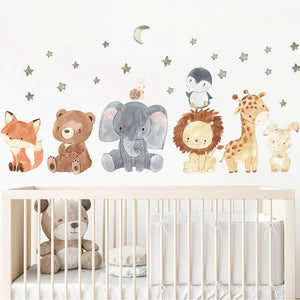
To dress a wall without frames or nails: botanical designs, arches, tree branches or abstract compositions.
A few matt ceramic pieces (a vase of dried flowers, a small pot, a candle holder) on the chest of drawers and bedside table.
A small pile of books on the bedside table, a wicker basket for throws, a woven rush laundry basket.
The three-heights rule: on a chest of drawers or bedside table, always style objects of different heights – one tall (a vase or lamp), one medium (stacked books or a framed picture), one small (a candle or candle holder). That's what creates rhythm and avoids the "lined up in size order" look.

FAQs
Which calming colours should I choose for a bedroom?
The most calming shades for a bedroom are sage green, greyed blue, off-white, linen and warm beiges. Avoid bright, saturated colours (red, bright yellow, fuchsia), which stimulate the brain and make it harder to fall asleep. If you want character, go for a deep but muted shade (petrol blue, forest green, dark terracotta) rather than a pure colour.
How should I decorate the wall above the bed?
Three options that always work: a statement headboard that stands on its own, a gallery wall of frames (3 to 5 frames, aligned or staggered), or a wall design – a block of paint, wallpaper, or an arch or branch wall sticker. The important thing is not to leave this wall completely bare, as it's what gives the room its visual structure.
How do I create a cosy, cocooning bedroom?
Cosy comes down to three ingredients: a warm palette (cream, dusky pink beige, taupe, terracotta), layered materials (washed linen, bouclé wool, velvet, chunky knits) and soft lighting from several low-level sources. Add a scented candle, a big throw at the foot of the bed and a thick rug, and you've got the essentials.
How do I decorate a small bedroom without overloading it?
Go for light colours on most of the walls, furniture on visible legs (which lightens the floor), vertical rather than horizontal storage, and a large mirror to multiply the light. Limit decorative objects to five or six well-chosen pieces at most, and choose an arch wall design above the bed rather than a cluster of frames.
Which textiles make a bedroom feel warm and inviting?
Washed linen or percale bedding gives a real hotel-quality feel. Add a rug big enough to extend well beyond the bed, curtains that fall to the floor (never stopping at the windowsill), a chunky-knit or linen throw at the foot of the bed, and two to four cushions in different sizes and textures to dress the headboard.
Want to dress your bedroom without building work?
Foliage, arch, branch and nature-inspired stickers – discover our designs created for the bedroom.
VISIT THE SHOP